The FMCG industry in India is growing rapidly, increasing the importance of efficient food supply chain management in India. As demand for packaged food products continues to expand across urban and rural markets, businesses are focusing on improving manufacturing efficiency, logistics systems, inventory coordination, and distribution operations. Strong supply chain management has become essential for maintaining product availability, reducing operational delays, and supporting long-term business growth.
The expansion of supermarkets, online grocery platforms, quick-commerce applications, and regional retail networks has significantly increased operational pressure on manufacturers and distributors. Consumers now expect faster product availability, better packaging quality, and consistent supply across different locations. To meet these expectations, companies are investing heavily in organized supply chain systems and scalable operational infrastructure.
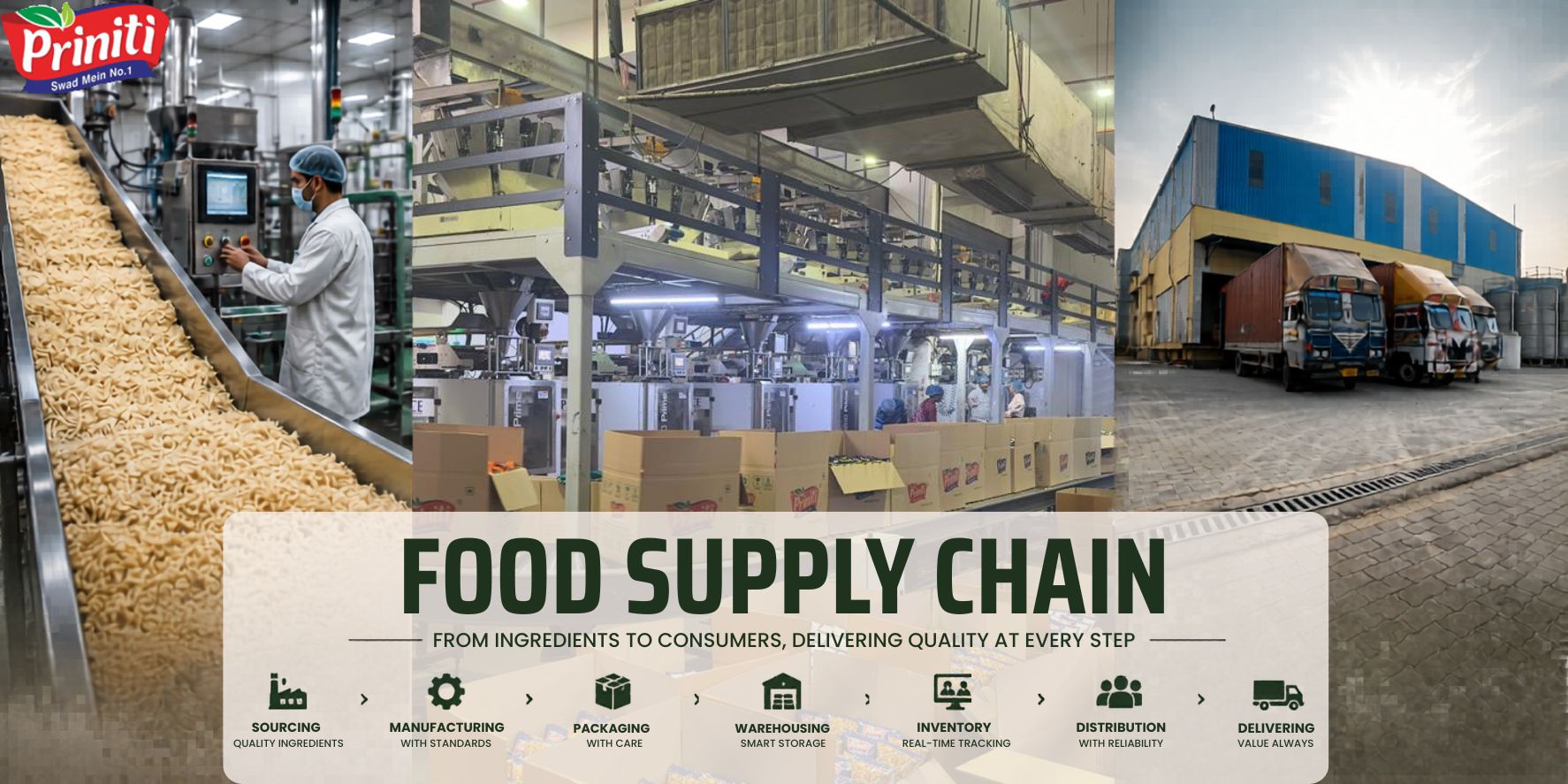
Food supply chain operations are no longer limited to transportation alone. It now includes warehousing, production planning, inventory management, packaging coordination, logistics optimization, and demand forecasting. Businesses capable of maintaining efficient supply operations are better positioned to improve operational performance and support scalable FMCG growth.
Understanding Food Supply Chain Management in India
Food supply chain operations refer to the complete process involved in moving food products from manufacturing facilities to end consumers efficiently. The system includes sourcing raw materials, production management, inventory coordination, warehousing, packaging, transportation, and retail distribution.
A structured supply chain system helps businesses maintain stable product movement across multiple market segments while reducing delays and operational inefficiencies. In the FMCG industry, efficient supply chains are critical because consumer demand changes rapidly across regions, retail channels, and seasonal cycles.
The supply chain generally follows a structured flow:
Manufacturer → Distributor → Wholesaler → Retailer → Consumer
Each stage plays an important role in maintaining operational consistency and product availability. Manufacturers focus on production efficiency, distributors manage regional supply movement, wholesalers handle bulk inventory, and retailers ensure products reach end consumers consistently.
Efficient food supply chain systems help businesses maintain smooth coordination across operational layers while improving supply performance.
Why Food Supply Chain Systems Are Important for FMCG Growth
The FMCG industry depends heavily on operational speed, supply consistency, and product availability. Without efficient supply chain systems, even strong products may struggle to maintain market performance.
One of the biggest advantages of efficient food supply chain systems is improved operational efficiency. Structured supply systems help businesses maintain faster inventory movement, better logistics coordination, and more reliable distribution operations.
Efficient supply chain management also supports:
- Faster product replenishment
- Better inventory control
- Reduced supply delays
- Improved retailer relationships
- Better warehouse coordination
- Stronger market reach
- Improved customer satisfaction
As competition increases, businesses are focusing on scalable supply chain systems that can support expanding market demand without affecting product quality or operational stability.
Efficient warehousing and distribution systems also play a critical role in maintaining product freshness and shelf life. Efficient warehousing, packaging, and transportation systems help businesses reduce operational losses and improve product consistency across retail markets.
Operational Challenges in Food Supply Chain Operations
Despite strong market growth, businesses face several operational challenges while managing FMCG supply chains efficiently.
1. Fragmented Retail Networks
India’s retail ecosystem includes kirana stores, wholesalers, supermarkets, online platforms, and quick-commerce applications. Managing product supply across these channels creates operational complexity for manufacturers and distributors.
2. Logistics and Transportation Issues
Transportation delays, rising fuel costs, and route inefficiencies directly affect delivery performance and product availability. Efficient logistics planning is essential for maintaining stable supply operations.
3. Inventory Management Problems
Poor inventory coordination can lead to stock shortages, delayed dispatches, or excessive inventory accumulation. Businesses must maintain accurate inventory tracking to improve supply efficiency.
4. Packaging and Product Safety
Food products require durable packaging systems to maintain freshness and protect products during storage and transportation. Weak packaging systems increase operational risks and product damage.
5. Demand Fluctuation
Consumer demand changes frequently across regions and seasons. Businesses must adjust production and distribution planning carefully to maintain operational stability.
These operational challenges highlight why efficient FMCG supply systems have become a major operational priority.
Role of Warehousing and Inventory Systems
Warehousing plays an important role in maintaining supply chain efficiency. Organized warehouse systems help businesses improve inventory movement, dispatch management, and storage coordination.
Modern warehouse systems support:
- Faster product handling
- Better stock visibility
- Improved dispatch planning
- Reduced operational delays
- Better inventory coordination
Inventory management systems also help businesses monitor stock levels and maintain stable product availability across distribution networks.
As FMCG demand continues to increase, businesses are investing in scalable warehousing systems to improve operational performance and support faster product movement.
Importance of Logistics in Food Supply Chain Operations
Logistics is one of the most important components of food supply chain operations. Efficient logistics systems help businesses maintain smooth product movement across manufacturing facilities, warehouses, distributors, and retail markets.
Modern logistics operations focus on:
- Transportation planning
- Route optimization
- Dispatch coordination
- Delivery tracking
- Inventory movement
- Supply scheduling
Efficient logistics systems help businesses reduce delivery delays and improve operational reliability. As quick-commerce and online grocery platforms continue to grow, logistics efficiency has become even more important in the FMCG industry.
Businesses with strong logistics operations are better positioned to maintain faster supply cycles and improve product availability across multiple regions.
Technology and Automation in Supply Chain Operations
Technology is rapidly transforming FMCG supply operations across India. Businesses are increasingly using automated systems and digital tools to improve operational efficiency and reduce supply chain errors.
Modern supply chain technologies include:
- Warehouse management systems
- Inventory tracking software
- Logistics monitoring systems
- Automated dispatch systems
- Demand forecasting tools
- Production planning systems
Automation helps businesses improve operational visibility and reduce manual dependency during large-scale operations.
Technology-driven supply chain systems also support faster decision-making, improved coordination, and better inventory control across manufacturing and distribution activities.
Market Trends Shaping Food Supply Chain Operations
Several trends are influencing the future growth of FMCG supply chain operations in India.
1. Expansion of Quick-Commerce
Instant delivery platforms are increasing demand for faster supply cycles and stronger warehouse coordination systems.
2. Growth of Packaged Food Products
The increasing demand for packaged snacks and FMCG products is creating higher pressure on manufacturing and distribution systems.
3. Increasing Focus on Food Safety
Businesses are investing more in hygiene management, packaging systems, and compliance standards to improve operational reliability.
4. Regional Market Expansion
Manufacturers are expanding into Tier 2 and Tier 3 cities, increasing the importance of scalable logistics and distribution infrastructure.
5. Technology-Driven Operations
Automation and digital supply systems are improving inventory tracking, warehousing, and logistics efficiency across the FMCG industry.
These trends are shaping how businesses approach operational planning and supply chain management.
Companies like Priniti Foods are contributing to efficient food supply chain operations through structured manufacturing systems, organized logistics operations, and scalable distribution networks.
How Priniti Foods Supports FMCG Supply Chain Operations
With over 16 years of experience in the FMCG sector, Priniti Foods has developed a strong operational ecosystem focused on product consistency and reliable supply operations. The company operates across multiple regions while maintaining efficient warehousing, inventory management, and distribution systems.
Priniti Foods has established a wide operational presence, including:
- 12+ countries
- 38 states
- 1100+ cities
- 1 lakh+ retail outlets
- 2600+ distributors and clients
The company focuses on maintaining operational efficiency through structured logistics planning, warehouse coordination, packaging systems, and inventory management.
Priniti Foods also follows strong compliance and quality standards supported by certifications such as:
- FSSAI
- FSSC 22000
- APEDA
- FDA Thailand
- FDA USA
These certifications reflect the company’s commitment to operational consistency and scalable FMCG supply chain systems.
Conclusion
Efficient FMCG supply chain systems play a major role in supporting business growth through logistics, warehousing, inventory control, and scalable distribution operations. As consumer demand continues to increase, businesses must focus on improving operational efficiency and maintaining stable supply chain operations across multiple markets.
Efficient supply chain systems help businesses improve product availability, reduce operational delays, and support long-term market expansion. Companies capable of managing manufacturing, warehousing, logistics, and distribution efficiently are better positioned for sustainable growth in the competitive FMCG industry.
As the FMCG sector continues to evolve, food supply chain systems will remain one of the most important factors shaping business scalability and distribution efficiency. Companies like Priniti Foods demonstrate how structured operational systems and reliable supply chain infrastructure can support long-term business growth.
FAQs
1. What is a food supply chain?
2. Why is food supply chain management important for FMCG growth?
It helps businesses maintain product availability, improve logistics efficiency, reduce operational delays, and support scalable distribution operations.
3. What challenges affect food supply chain management in India?
Common challenges include logistics delays, fragmented retail systems, inventory issues, packaging concerns, and changing consumer demand.
4. How does technology improve food supply chain management?
Technology improves warehouse coordination, inventory tracking, logistics monitoring, operational visibility, and supply chain efficiency.
5. How does Priniti Foods support efficient supply chain operations?
Priniti Foods supports supply chain operations through structured manufacturing systems, organized logistics planning, scalable distribution networks, and strong quality control processes.