
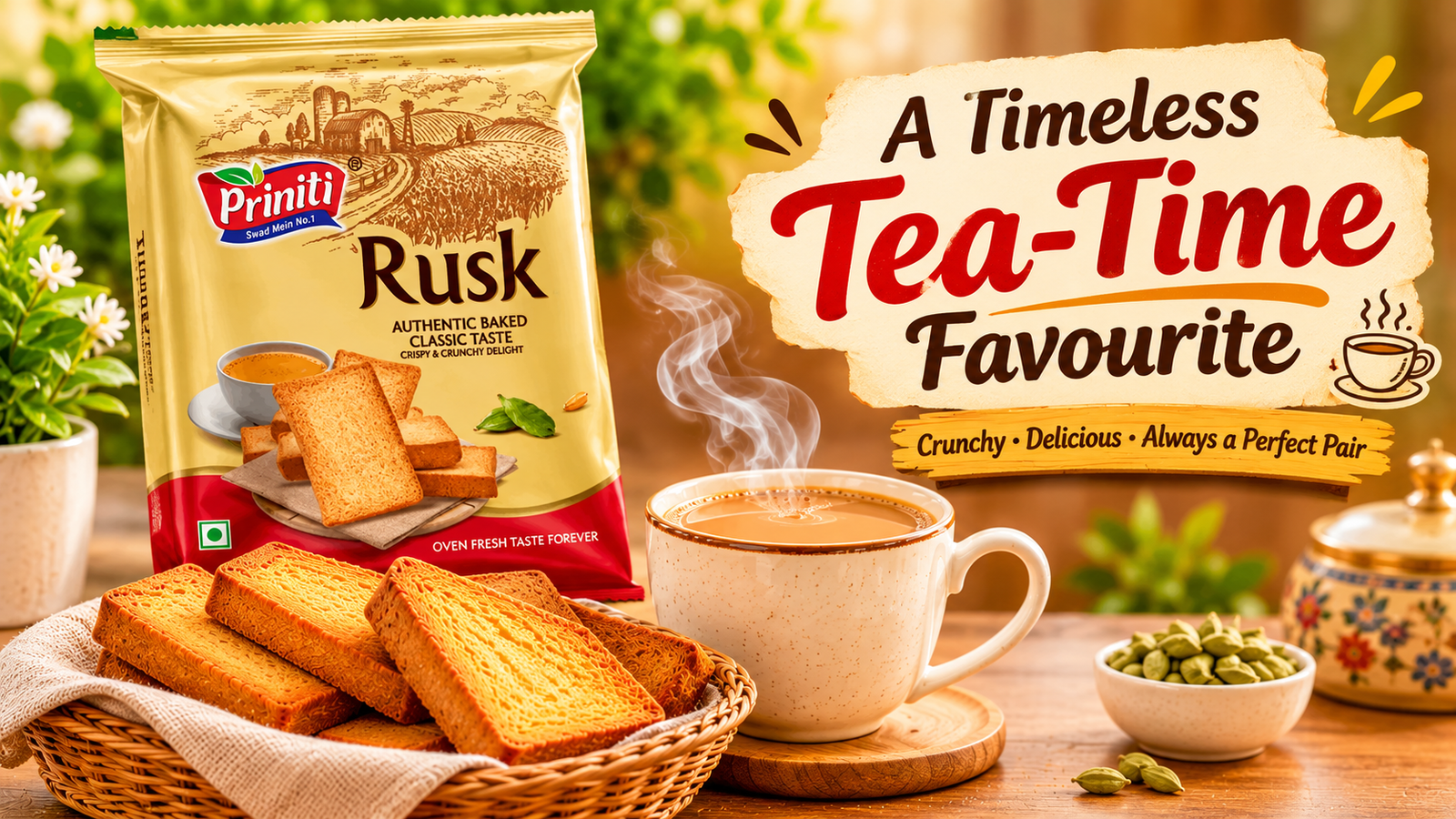
Why Is Rusk Traditionally Served with Tea?
Rusk is one of the most familiar baked snacks found in Indian households. Known for its hard, crunchy texture and mildly sweet, toasted flavour, it is commonly enjoyed across India, particularly during breakfast and evening tea breaks. Rusk with Tea is a popular combination enjoyed by people of all age groups, as children, adults and older people all enjoy this simple baked snack.
One of the biggest reasons behind its popularity is how easily it pairs with a cup of tea. Rusk offers a mild taste that complements both regular milk tea and masala chai. It is easy to store, convenient to serve and requires almost no preparation. For many families, having Rusk with tea is more than an eating habit; it is a familiar routine that has continued across generations.
Let’s explore how tea and rusk became a familiar pairing and why this traditional combination continues to hold a special place in Indian tea-time culture.
-
The History Behind Tea and Rusk
The story of rusk goes back several centuries. Similar twice-baked bread products were traditionally prepared in different parts of the world to remove moisture and make bread last longer. This process created a dry, crisp product that could be stored for an extended period compared with ordinary bread.
Over time, different cultures developed their own versions of rusks. In India, rusk became particularly popular alongside the growing culture of tea drinking.
Tea gradually became a regular beverage in Indian households during the twentieth century. As more families adopted morning and evening tea routines, they also looked for simple food items that could accompany a hot cup without requiring much preparation. The combination eventually became a familiar part of Indian households, with bakeries and food manufacturers introducing different varieties to suit changing consumer preferences.
-
Why Is Rusk One of the Most Popular Indian Tea-Time Snacks?
India has a wide variety of tea-time snacks. From namkeen and biscuits to samosas and savoury mixtures, people enjoy different foods with their evening chai.
Here are some reasons behind its continued appeal.
Convenience: Rusk does not require cooking, heating or elaborate preparation. You simply open the packet and serve it.
Easy storage: Its low moisture content makes it suitable for storage in an airtight container or properly sealed packaging, helping maintain its crispness.
Familiar taste: The traditional baked flavour and mild sweetness appeal to people who prefer simple snacks.
Different varieties: From plain and milk rusk to elaichi and suji rusk, consumers can choose according to their taste preferences.
Suitable for different occasions: Rusk can be served during breakfast, evening tea breaks, family gatherings and casual visits from guests.
Another reason is familiarity. Many people grew up watching their parents and grandparents enjoy rusk with chai. This everyday habit has gradually become a part of household food culture.
-
Rusk and Changing Indian Food Habits
Indian snacking habits have changed significantly over the years. Consumers now have access to packaged biscuits, chips, namkeen, cookies, baked snacks and several other ready-to-eat products. Despite this growing variety, traditional options such as rusk continue to find a place in everyday consumption.
At the same time, the packaged food industry has made rusk more accessible through different pack sizes, flavours and product options.
Smaller packs are convenient for individual consumption, while larger packs are suitable for households where tea-time snacking is a regular habit. Food manufacturers are also focusing on packaging, product consistency and maintaining the crisp texture that consumers expect. This combination of traditional eating habits and modern food manufacturing has helped rusk remain relevant in an increasingly competitive snack market.
-
Tips for Choosing and Storing a Good Rusk Biscuit
A good rusk should offer the right balance of crispness, flavour and freshness. Whether you enjoy plain rusk or a flavoured variety, a few simple checks can help you make a better choice.
- Check the ingredients: Read the ingredient list to understand the flour, sugar, fats and other ingredients used.
- Look at the packaging: Choose properly sealed packets that protect the product from moisture.
- Check the expiry date: Always check the manufacturing and best-before information before purchasing.
- Look for freshness: Fresh rusk should have its characteristic crisp texture and pleasant baked aroma.
- Store it properly: Once opened, transfer the remaining pieces to an airtight container and keep them in a cool, dry place.
- Avoid moisture exposure: Even a small amount of moisture can affect the crunchiness of rusk.
These small steps can help maintain the quality and taste of your favourite tea-time snack.
Frequently Asked Questions (FAQs)
- Why is rusk traditionally served with tea?
Rusk is traditionally served with tea because its crispy texture, mild sweetness and baked flavour complement the warmth and taste of tea. It also becomes softer when briefly dipped into a hot beverage, making it enjoyable to eat.
- What is the difference between rusk and a regular biscuit?
Rusk is generally made by baking bread or dough, then baking it again after slicing. This gives it a firm, dry and crunchy texture. Regular biscuits are usually prepared directly as individual baked products using different doughs and recipes.
- Which type of rusk is best with Indian tea?
Plain, milk and elaichi rusks are popular choices with Indian milk tea. The best option depends on whether you prefer a simple baked flavour, a richer taste or a hint of cardamom.
- How do you keep rusk crispy after opening the packet?
Store the remaining rusk in an airtight container in a cool and dry place. Avoid exposing it to moisture, as this can make the pieces lose their characteristic crispness.
- Why does rusk have a crunchy texture?
Rusk gets its characteristic crunchy texture through a double-baking process. After the initial baking, it is sliced and baked again to remove moisture, giving it a dry, firm texture that makes it a popular tea-time snack. See more