India’s food sector has transformed significantly over the past decade due to changing consumer lifestyles, rapid urbanization, higher disposable incomes, and increasing demand for packaged food products. Consumers today expect food that is safe, hygienic, convenient, and consistent in quality, creating new opportunities for manufacturers across the country. As a result, the food processing industry has become one of the key pillars supporting India’s food manufacturing ecosystem while strengthening the connection between agriculture, manufacturing, and retail.
The food processing industry plays a vital role in converting raw agricultural produce into value-added food products that are suitable for storage, transportation, and large-scale distribution. From packaged snacks and bakery products to traditional sweets and ready-to-eat foods, food processing helps improve product quality, reduce wastage, and ensure that consumers receive safe and reliable products.
India’s strong agricultural foundation, combined with advancements in manufacturing technology and organized retail, has accelerated the growth of the food processing industry. Government support, increasing investments, and growing consumer awareness have further strengthened this sector, making it an important contributor to the country’s FMCG market.
In this article, we explore the importance of the food processing industry, the major factors driving its growth, the challenges manufacturers face, future business opportunities, and how companies like Priniti Foods contribute to India’s expanding food manufacturing sector.
What Is the Food Processing Industry?
The food processing industry involves transforming raw agricultural ingredients into safe, high-quality, and consumer-ready food products using various manufacturing techniques. These techniques include cleaning, grading, cooking, mixing, drying, freezing, packaging, and preserving food to improve quality, extend shelf life, and maintain food safety standards.
The main objective of the food processing industry is to add value to agricultural products while making them easier to store, transport, and distribute. Modern food processing also helps manufacturers maintain product consistency, minimize waste, and ensure compliance with food safety regulations.
Today, the industry includes a wide range of product categories, such as
- Potato Chips
- Namkeen
- Fryums
- Popcorn
- Bakery Products
- Traditional Indian Sweets
- Ready-to-Eat Foods
- Frozen Foods
- Packaged Snacks
- Beverages
These products are manufactured using structured production systems that help maintain freshness, taste, and quality throughout the supply chain. As demand for packaged foods continues to grow, the food processing industry remains essential for supporting both domestic consumption and organized retail across India.
Growth Drivers of the Food Processing Industry in India
The food processing industry continues to expand because of several economic and consumer-driven factors. One of the biggest growth drivers is the increasing demand for packaged and convenient food products. Busy lifestyles and changing eating habits have encouraged consumers to choose products that are easy to store, quick to consume, and manufactured under hygienic conditions.
India’s strong agricultural base also provides a significant advantage. As one of the world’s leading producers of cereals, fruits, vegetables, dairy products, and spices, the country has access to abundant raw materials that support food manufacturing. Efficient processing helps convert these resources into value-added products while reducing post-harvest losses and improving supply chain efficiency.
Another important factor supporting the food processing industry is the expansion of organized retail and e-commerce. Supermarkets, hypermarkets, convenience stores, and online grocery platforms have increased consumer access to packaged food products, creating greater demand for efficient manufacturing and distribution.
Government initiatives, infrastructure development, improved cold chain facilities, and greater awareness of food safety have also encouraged investment across the sector. These developments have helped manufacturers improve production capacity while creating new opportunities for retailers, distributors, exporters, and private label businesses.
Overall, the combination of agricultural strength, technological advancement, organized retail growth, and evolving consumer preferences continues to position the food processing industry as one of the fastest-growing segments within India’s food and FMCG sectors.
Why Modern Manufacturing Is Essential
The food processing industry plays an essential role in improving the efficiency and reliability of India’s food supply chain. By converting raw agricultural produce into packaged and value-added products, the industry helps preserve food quality, extend shelf life, and reduce post-harvest losses. This ensures that consumers receive safe and consistent food products while manufacturers can efficiently meet market demand.
Another major contribution of the food processing industry is improving food safety. Modern manufacturing facilities follow structured production processes, quality control measures, and hygienic packaging practices to maintain product consistency and comply with food safety standards. These efforts help build consumer trust while supporting retailers and distributors with dependable food products.
Beyond product quality, the industry contributes significantly to employment generation and economic development. It creates opportunities across manufacturing, packaging, logistics, warehousing, retail, and distribution, supporting businesses of all sizes. As organized retail continues to grow, food processing will remain a key driver of India’s FMCG sector.
Some of the major benefits include:
- Improved food safety and hygiene
- Reduced food wastage
- Longer product shelf life
- Better product consistency
- Efficient large-scale manufacturing
- Stronger supply chain management
- Employment generation
- Increased opportunities for domestic and export markets
As consumer expectations continue to evolve, the food processing industry will remain a vital part of India’s manufacturing ecosystem by delivering products that combine quality, convenience, and reliability.
Major Product Categories in Food Manufacturing
The food processing industry includes a wide range of product categories that serve consumers across different regions and preferences. Each segment contributes to meeting the growing demand for packaged food products while supporting retailers, wholesalers, and distributors through organized manufacturing and efficient supply chains.
One of the largest categories is packaged snacks, which includes potato chips, namkeen, fryums, popcorn, and extruded snacks. These products continue to experience strong demand because they offer convenience, longer shelf life, and wide availability across retail outlets.
Bakery products are another important segment, covering biscuits, cookies, cakes, rusks, and other baked items. Growing urbanization and changing lifestyles have increased the popularity of packaged bakery products that combine taste with convenience.
Traditional Indian sweets also remain an important category within the food processing industry. Products such as Gulab Jamun, Rasgulla, Soan Papdi, Besan Ladoo, and Panjeeri Ladoo continue to enjoy consistent demand during festivals, celebrations, and everyday occasions. Hygienic packaging and organized manufacturing have further strengthened this segment.
Apart from snacks and sweets, the sector also includes dairy products, beverages, frozen foods, ready-to-cook meals, cereals, spices, edible oils, and processed fruits and vegetables. This wide product diversity allows manufacturers to serve different consumer needs while creating new business opportunities across the FMCG market.
Challenges Facing Food Manufacturers
Although the food processing industry continues to expand rapidly, manufacturers also face several operational and market challenges. Maintaining consistent product quality while controlling production costs requires continuous investment in technology, skilled manpower, and quality management systems. One of the biggest challenges is ensuring a steady supply of quality raw materials. Agricultural production depends on seasonal conditions and market fluctuations, which can affect manufacturing schedules and overall production efficiency.
Packaging and logistics also require careful planning. Products must be protected during storage and transportation to maintain freshness and quality. Efficient warehousing, inventory management, and distribution systems are therefore essential for ensuring products reach retailers and consumers in excellent condition.
In addition, rising production costs, changing consumer preferences, and increasing competition encourage manufacturers to innovate continuously. Businesses are investing in advanced manufacturing technologies, sustainable packaging, and product development to remain competitive while meeting evolving market expectations.
Despite these challenges, companies that focus on quality manufacturing, efficient operations, and customer satisfaction are well positioned to achieve long-term success in India’s growing food sector.
Future Trends and Business Opportunities
The future of the food processing industry in India looks highly promising as consumer preferences continue to evolve and demand for packaged food products increases. Modern consumers expect products that offer convenience, quality, hygiene, and consistent taste, encouraging manufacturers to adopt advanced production technologies and improve operational efficiency.
Automation is becoming one of the biggest growth drivers within the Food Processing Industry. Modern production equipment, digital monitoring systems, and automated packaging solutions help manufacturers improve productivity while maintaining consistent product quality. These technologies also reduce operational costs and improve overall manufacturing efficiency.
Another emerging opportunity is private label manufacturing. Retail chains and businesses are increasingly partnering with experienced manufacturers to develop customised food products under their own brands. This trend is creating new business opportunities for manufacturers with strong production capabilities, quality standards, and scalable operations.
Growing export demand is also supporting the expansion of the Food Processing Industry. Indian food products are gaining recognition in international markets due to their variety, competitive pricing, and improving manufacturing standards. At the same time, sustainable packaging, responsible manufacturing practices, and environmentally conscious production methods are becoming increasingly important for businesses looking to strengthen their market presence.
As investments in technology, infrastructure, and innovation continue to increase, the Food Processing Industry is expected to remain one of the fastest-growing segments within India’s manufacturing and FMCG sectors.
How Priniti Foods Supports Modern Food Manufacturing
As the Food Processing Industry continues to grow, manufacturers that focus on quality, innovation, and operational excellence play an important role in supporting the market. Priniti Foods contributes to this growth by manufacturing a diverse portfolio of food and snack products that meet modern consumer expectations while maintaining consistent quality standards.
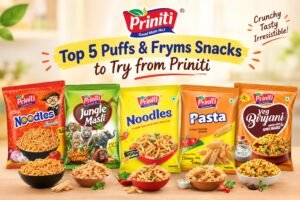
With a portfolio of 165+ products, Priniti Foods serves retailers, distributors, wholesalers, and business partners across India. Its product range includes potato chips, namkeen, popcorn, fryums, bakery products, and traditional Indian sweets, all manufactured using structured production processes and hygienic packaging practices.
The company also focuses on efficient manufacturing, reliable supply chain management, and organised distribution to ensure products reach retailers and consumers on time. By continuously improving production capabilities and maintaining high quality standards, Priniti Foods contributes to the ongoing development of India’s Food Processing Industry while supporting long-term business growth for its partners.
Conclusion
The Food Processing Industry has become a key driver of India’s food manufacturing ecosystem by transforming agricultural produce into safe, high-quality, and value-added food products. From improving food safety and reducing wastage to creating employment opportunities and strengthening supply chains, the industry continues to support sustainable growth across the country’s FMCG sector.
Driven by technological advancements, organised retail expansion, and increasing demand for packaged foods, the Food Processing Industry is expected to witness continued growth in the coming years. Businesses that invest in quality manufacturing, efficient operations, and customer-focused innovation will be well positioned to succeed in this rapidly evolving market.
Companies such as Priniti Foods demonstrate how modern manufacturing, consistent quality, and strong distribution networks can contribute to the industry’s progress while delivering reliable food products to retailers, distributors, and consumers across India.
Frequently Asked Questions
1. What is food processing?
The Food Processing Industry involves converting raw agricultural products into safe, packaged, and value-added food products using modern processing, preservation, and manufacturing techniques.
2. Why Is the Food Processing Industry Important in India?
The Food Processing Industry supports food safety, reduces post-harvest losses, extends product shelf life, creates employment opportunities, and contributes significantly to India’s food manufacturing and FMCG sectors.
3. Which products are included in modern food manufacturing?
The industry includes packaged snacks, potato chips, namkeen, bakery products, traditional Indian sweets, beverages, dairy products, frozen foods, ready-to-eat meals, cereals, and processed fruits and vegetables.
4. What are the major challenges faced by food manufacturers?
Food manufacturers commonly face challenges related to raw material availability, quality control, packaging, logistics, production costs, regulatory compliance, and changing consumer preferences.
5. How Does Priniti Foods Support the Food Processing Industry?
Priniti Foods contributes to the Food Processing Industry by manufacturing over 165+ food and snack products, maintaining quality-focused production processes, and supporting retailers and distributors through an organised manufacturing and distribution network.