What Are Private Label Snacks?
The demand for packaged snacks in India, especially private label snacks, has grown rapidly over the past decade, driven by urbanization, rising disposable income, and the expansion of retail and quick-commerce platforms. From small kirana stores to modern supermarkets and instant delivery apps, snacks have become an essential part of everyday consumption. This shift in consumer behavior has opened significant opportunities for businesses looking to enter the FMCG sector.
As competition increases, companies are constantly searching for scalable and cost-efficient business models. One of the most practical and widely adopted strategies today is working with private label snacks. This model allows businesses to build their own brand without managing manufacturing operations, making it highly attractive for distributors, wholesalers, and new entrepreneurs in this segment.
Instead of investing heavily in production facilities, businesses can partner with experienced manufacturers and focus on branding, marketing, and distribution. This approach reduces operational complexity while allowing faster entry into the market. Over time, private label snacks have evolved from a niche strategy into a mainstream business model used across the snack industry and growing demand in this category.
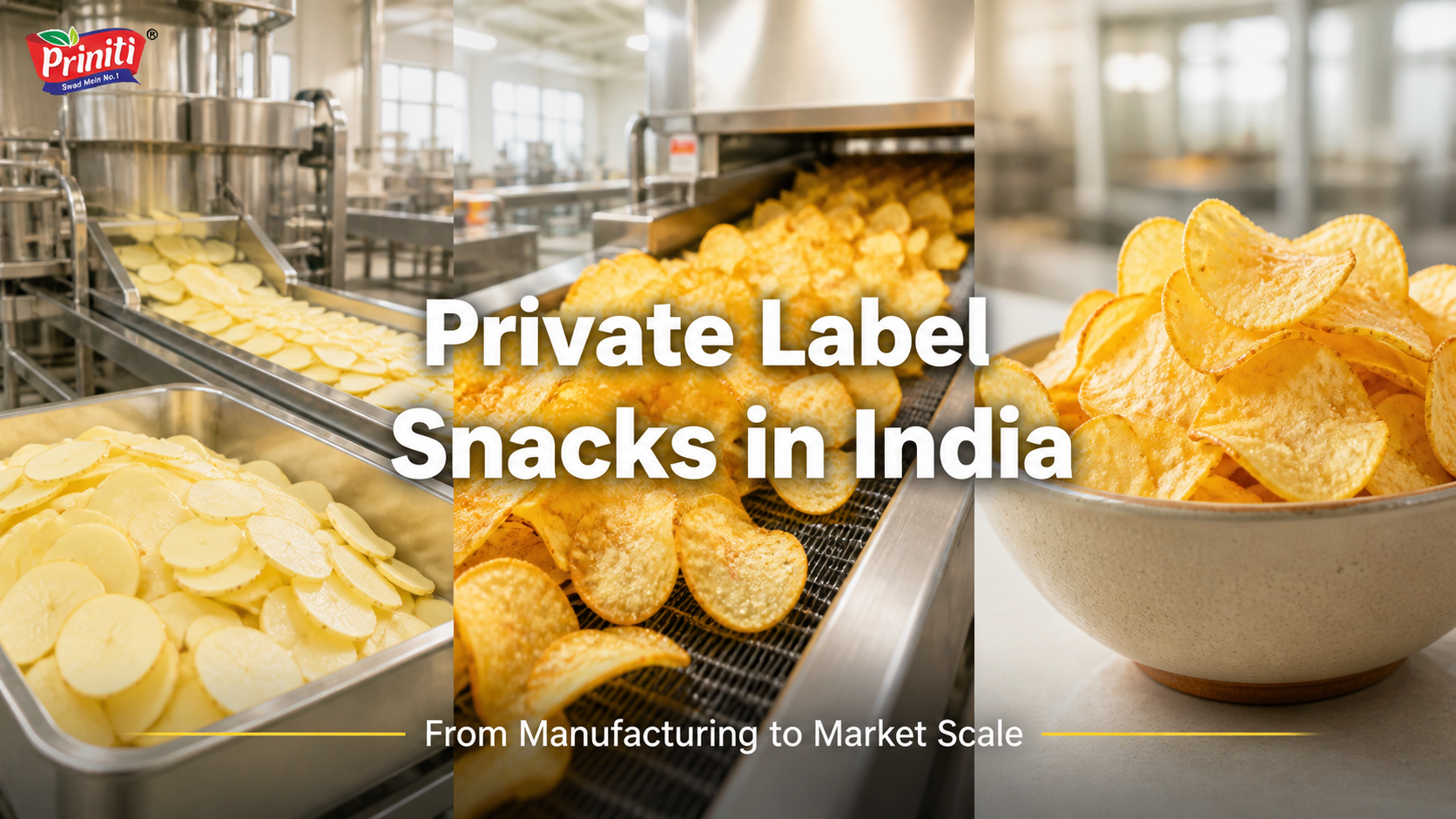
Private label snacks are products manufactured by one company but sold under another company’s brand name. In this system, the manufacturer handles production, processing, and packaging, while the business focuses on branding, pricing, and distribution.
This model is widely used by retail chains, distributors, and emerging brands that want to establish a presence in the market without building manufacturing infrastructure. It allows businesses to enter the industry quickly while maintaining control over branding and market positioning in private label snacks.
By separating production from business operations, private label snacks create a streamlined system where each party focuses on its strengths. Manufacturers handle efficiency and quality, while businesses focus on growth and market reach in this model.
Core Responsibilities in Private Label Snacks
1. Production and quality control are managed by manufacturers
2. Packaging and labeling customized as per brand identity
3. Bulk production aligned with demand requirements
4. Distribution handled by brand owners and partners
This structure simplifies the entire process and enables faster scaling of private label snacks.
Why Businesses Choose Private Label Snacks?
Choosing this approach is not just about convenience it is a strategic decision that impacts growth, profitability, and long-term sustainability.
One of the biggest advantages is low investment. Businesses do not need to spend on factory setup, machinery, or workforce, which significantly reduces financial risk. This makes it easier for new entrants to test the market without committing large amounts of capital.
Another key benefit is faster market entry. Since manufacturers already have established production systems, products can be launched quickly. This allows businesses to respond faster to market trends and consumer demand using private label snacks.
Brand ownership is another important factor. Businesses can build their own identity, control pricing strategies, and position their products according to their target audience.
Scalability is also a major advantage. Production can be increased based on demand without requiring additional infrastructure. This flexibility is essential in growing private label snacks.
Because of these factors, private label snacks have become a preferred choice for businesses aiming to scale efficiently in the snack industry.
How Private Label Snacks Work in the Supply Chain?
The supply chain follows a structured model similar to large FMCG operations.
Brand Owner → Manufacturer → Packaging → Distributor → Retailer → Consumer
The process begins with selecting a reliable manufacturing partner. The business then finalizes product specifications such as flavor, packaging, and pricing. Once production is completed, the product moves through distribution channels until it reaches the end consumer.
Many businesses collaborate with experienced chip manufacturers in India to ensure consistency in quality and supply. This partnership is important because it directly affects product performance in the market and strengthens private label snacks.
Operational Understanding
1. Production cycles usually range between 3 and 7 days, depending on volume
2. Minimum order quantities vary based on the manufacturer’s capabilities
3. Demand tends to increase during festive periods and in urban markets
4. Consistent supply is critical for maintaining retailer relationships
Understanding these operational factors helps businesses plan effectively and manage operations efficiently.
How to Evaluate Manufacturing Partners
Key Evaluation Factors for Private Label Snacks
1. Product Quality
Consistency in taste, texture, and ingredients directly impacts customer satisfaction and repeat purchases in private label snacks.
2. Production Capacity for Private Label Snacks
The manufacturer should be able to handle bulk orders and scale production without delays.
3. Pricing and Margins
Pricing and margins play a major role in profitability when working with this model.
4. Certifications
Certifications such as FSSAI and FSSC 22000 ensure that products meet safety and quality standards.
5. Packaging Standards
Packaging quality also matters as it improves shelf life and product appeal.
6. Distribution Capability in Private Label Snacks
Distribution capability is another key factor for scaling across markets.
How to Build a Strong Brand
Building a successful brand requires a structured and consistent approach. Businesses should start by identifying their target audience and understanding market demand. Product selection should align with consumer preferences. Branding and packaging should be designed to stand out in competitive markets. Distribution channels must be developed carefully to ensure product availability.
Maintaining consistent quality is essential for building trust and long-term customer relationships.
Market Trends
The snack industry continues to evolve due to changing consumer behavior. The growth of quick-commerce platforms is increasing accessibility. Expansion into smaller cities is creating new opportunities. Demand for affordable products is rising, while packaging innovation is becoming a key differentiator.
These trends indicate strong growth potential in the coming years.
Cost and Margin Structure
Understanding the cost structure is essential for building a profitable business. Typical breakdown includes manufacturer margins, brand owner margins, distributor margins, and retailer margins. Each layer contributes to the final pricing of the product.
Additional costs such as logistics, storage, and marketing must also be considered when planning operations.
Types of Business Models
Different variations exist depending on the level of customization and scale.
1. The basic model involves standard products with custom branding. This is suitable for businesses entering the market with limited investment.
2. A custom product model allows businesses to create unique flavors and differentiate themselves.
3. The premium model focuses on high-quality products with advanced packaging and positioning.
4. The bulk model is designed for large-scale distribution and wholesale operations.
5. Each approach offers flexibility depending on business goals and target markets.
Benefits for Business Growth
This model provides several advantages that support long-term growth. It reduces operational burden by removing the need for manufacturing management. It allows faster product launches, helping businesses respond quickly to market demand.
Profit margins can be optimized by controlling branding and pricing. Businesses also gain full control over their brand identity. Scalability remains one of the strongest advantages. Businesses can expand across regions without investing in additional infrastructure.
Common Mistakes to Avoid
Despite the benefits, certain mistakes can affect performance. Choosing unreliable manufacturers can lead to inconsistent quality and supply issues. Ignoring certifications can create compliance risks. Weak branding reduces market visibility, while poor distribution planning can limit growth. Lack of market research often results in incorrect product positioning.
Avoiding these mistakes is essential for building a sustainable business.
Why Priniti Foods is a Trusted Partner
When selecting a partner, reliability, scale, and consistency are critical. Priniti Foods has established itself as a strong player in the snack manufacturing industry. Priniti Foods supports private label snacks through its large-scale manufacturing and distribution capabilities. With over 16 years of experience, the company operates across multiple regions and maintains a strong distribution network. Its presence in 12+ countries, 38 states, and 1100+ cities reflects its ability to scale operations effectively. Serving over 1 lakh retail outlets with the support of 2600+ distributors, Priniti Foods ensures consistent product availability. With ₹910+ crore revenue and a wide product portfolio, the company provides both scale and stability. The company follows strict quality standards and holds certifications such as FSSAI, FSSC 22000, APEDA, FDA Thailand, and FDA USA. These certifications ensure compliance with both domestic and international requirements.
Its advanced manufacturing systems, strong logistics network, and consistent quality make it a reliable choice for businesses looking to grow.
Conclusion
This business model offers a practical and scalable way to enter the snack industry without heavy investment. By focusing on branding and distribution while partnering with reliable manufacturers, businesses can achieve steady growth.
As market demand continues to rise, this approach will play an important role in shaping the future of the snack industry. Businesses that adopt the right strategy and build strong partnerships can create long-term success. Businesses looking to scale in private label snacks can benefit from working with experienced manufacturers like Priniti Foods.
FAQs
1. What Are Private Label Snacks in India?
Private label snacks are products manufactured by one company and sold under another brand name in this business model.
2. Are private label snacks profitable
Yes, private label snacks offer strong margins due to reduced production costs and scalable operations.
3. Do manufacturers provide customization?
Yes, most manufacturers provide customization, including packaging, flavors, and branding.
4. What certifications are required?
FSSAI and FSSC 22000 certifications are important to ensure safety and compliance.
5. Can small businesses start?
Yes, this model is suitable for small and growing businesses looking to enter the snack industry.
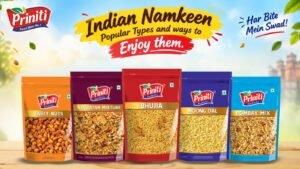
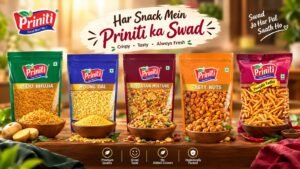
It’s fascinating to see how India’s snack market blends traditional flavors with modern twists. The variety showcased really highlights the creativity and adaptability required for success in this space.