India has a rich and diverse sweet-making tradition that has been cherished for centuries. From festive celebrations and religious occasions to family gatherings and special moments, sweets have always been an important part of Indian culture. These delicious treats are more than just desserts; they symbolize joy, hospitality, and togetherness. Despite changing consumer preferences and evolving food trends, traditional sweets continue to enjoy strong demand across all age groups. Their familiar flavours, cultural significance, and emotional connection have helped them remain a timeless favourite in Indian households. Today, the growing popularity of packaged and hygienically produced sweets is further expanding opportunities for retailers, distributors, and manufacturers across the FMCG sector. The continued demand for traditional indian sweets highlights their importance in both Indian culture and the growing FMCG food market.
Why Traditional Indian Sweets Remain Popular Across Generations
Traditional Indian sweets have maintained their popularity because they are deeply rooted in Indian traditions and celebrations. A wide variety of sweets have been enjoyed by families for generations, creating strong emotional and cultural associations.
Whether it is a festival, wedding, birthday, religious ceremony, or family gathering, sweets continue to play a central role in every celebration. Unlike many food trends that change over time, traditional sweets have remained relevant because they appeal to both older and younger consumers.
Another reason behind their popularity is variety. India offers a wide range of sweets, each with its own unique taste, texture, and cultural significance. This diversity ensures that consumers always have something that matches their preferences and occasions.
Popular Traditional Indian Sweets Loved by Consumers
Dry Fruit Besan Ladoo
Dry Fruit Besan Ladoo is one of the most loved traditional sweets in India. Known for its rich flavour and smooth texture, it remains a popular choice during festivals and family celebrations. The addition of dry fruits enhances both taste and overall appeal, making it a preferred sweet for gifting and special occasions.
Gulab Jamun
Gulab Jamun is often considered one of India’s most iconic sweets. Its soft texture and delicious syrup make it a favourite among consumers of all ages. Whether served at weddings, parties, or festive gatherings, Gulab Jamun continues to be one of the most widely enjoyed sweets across the country.
Dry Fruit Panjeeri Ladoo
Dry Fruit Panjeeri Ladoo combines traditional ingredients with the richness of dry fruits to create a sweet that is both flavourful and satisfying. Its authentic taste and traditional appeal have helped it remain popular among consumers looking for classic Indian sweet options.
Rasgulla
Rasgulla is known for its soft, spongy texture and refreshing sweetness. It has gained popularity across multiple regions of India and is frequently enjoyed during celebrations and festive occasions. Its light and enjoyable taste makes it a favourite choice among sweet lovers.
Soan Papdi
Soan Papdi has become a festive staple in Indian households. Famous for its flaky texture and melt-in-the-mouth experience, it is one of the most commonly exchanged sweets during festivals and celebrations. Its widespread popularity continues to make it a high-demand sweet category.
Soan Papdi Pouch
Modern consumers increasingly prefer convenient packaging options. Soan Papdi Pouch offers the same traditional taste while providing portability and convenience. This makes it suitable for both personal consumption and retail sales.
Growing Demand for Packaged Traditional Indian Sweets
The Indian sweets market has evolved significantly in recent years. Consumers are now looking for products that not only deliver authentic taste but also ensure hygiene, freshness, and quality consistency.
This shift has increased the demand for packaged traditional sweets across retail stores and modern trade channels. Branded and professionally packaged products provide greater consumer confidence while helping retailers offer reliable and trusted products.
Packaged sweets also offer advantages such as better shelf life, attractive presentation, and easier distribution. As a result, they are becoming increasingly important within the FMCG industry.
The growth of organized retail and modern distribution channels has played a major role in increasing the popularity of packaged sweets. Consumers today have access to a wider variety of products than ever before, allowing them to choose sweets based on taste preferences, packaging formats, and convenience. This has encouraged manufacturers to focus on quality, branding, and product consistency. In addition, the gifting culture in India continues to drive demand for packaged sweets. During festivals such as Diwali, Raksha Bandhan, and Holi, consumers often prefer branded products because they offer attractive packaging and greater confidence in quality standards. This trend is helping the sweets category expand beyond traditional retail channels and reach a wider consumer base. As consumer preferences evolve, traditional indian sweets are increasingly being chosen in packaged formats that offer convenience, quality, and longer shelf life.
Traditional Indian Sweets: A Strong Business Opportunity
Traditional sweets represent a valuable business opportunity for retailers and distributors. Unlike many seasonal categories, sweets generate demand throughout the year while also experiencing strong sales growth during festive periods
The sweets category also benefits from strong seasonal demand patterns. During festive seasons, retailers often experience a significant increase in consumer purchases, while regular demand throughout the year helps maintain stable sales. This combination of seasonal peaks and year-round consumption makes sweets one of the most reliable categories in the FMCG industry. Another advantage for retailers is product diversity. Different sweet varieties appeal to different consumer segments, allowing businesses to cater to a broader customer base. By offering multiple products within the same category, retailers can improve shelf utilization and increase overall sales opportunities.
For retailers, traditional sweets offer:
- Strong consumer demand
- Consistent repeat purchases
- Attractive shelf presence
- Seasonal sales growth opportunities
For distributors, the category provides:
- Reliable market demand
- Scalable business opportunities
- Broad consumer appeal
- Strong retail acceptance
These factors make traditional Indian sweets one of the most dependable categories within the food and snacks industry.
How Priniti Foods Brings Traditional Sweets to Modern Consumers
As consumer demand continues to evolve, brands must balance traditional taste with modern manufacturing standards. Priniti Foods focuses on offering products that preserve the authentic flavours consumers expect while ensuring quality, hygiene, and product consistency. This approach helps meet the expectations of both long-time sweet lovers and modern consumers looking for trusted packaged products. To serve the growing demand for traditional sweets, Priniti Foods offers a carefully selected range of products designed to deliver authentic taste and quality. The company’s growing distribution presence allows these products to reach consumers across multiple markets. By combining traditional recipes with efficient supply chain management, Priniti Foods continues to strengthen its position within the Indian sweets segment. Modern retail stores have transformed the way consumers purchase sweets. Supermarkets, convenience stores, and organized retail chains now offer a wide variety of packaged sweet products that are easily accessible throughout the year. Attractive packaging, improved shelf visibility, and consistent product quality have made traditional sweets more convenient for consumers.
This evolution has created new opportunities for manufacturers, distributors, and retailers alike. As consumer confidence in packaged food products continues to grow, traditional sweets are expected to become an even more important category within India’s retail ecosystem.
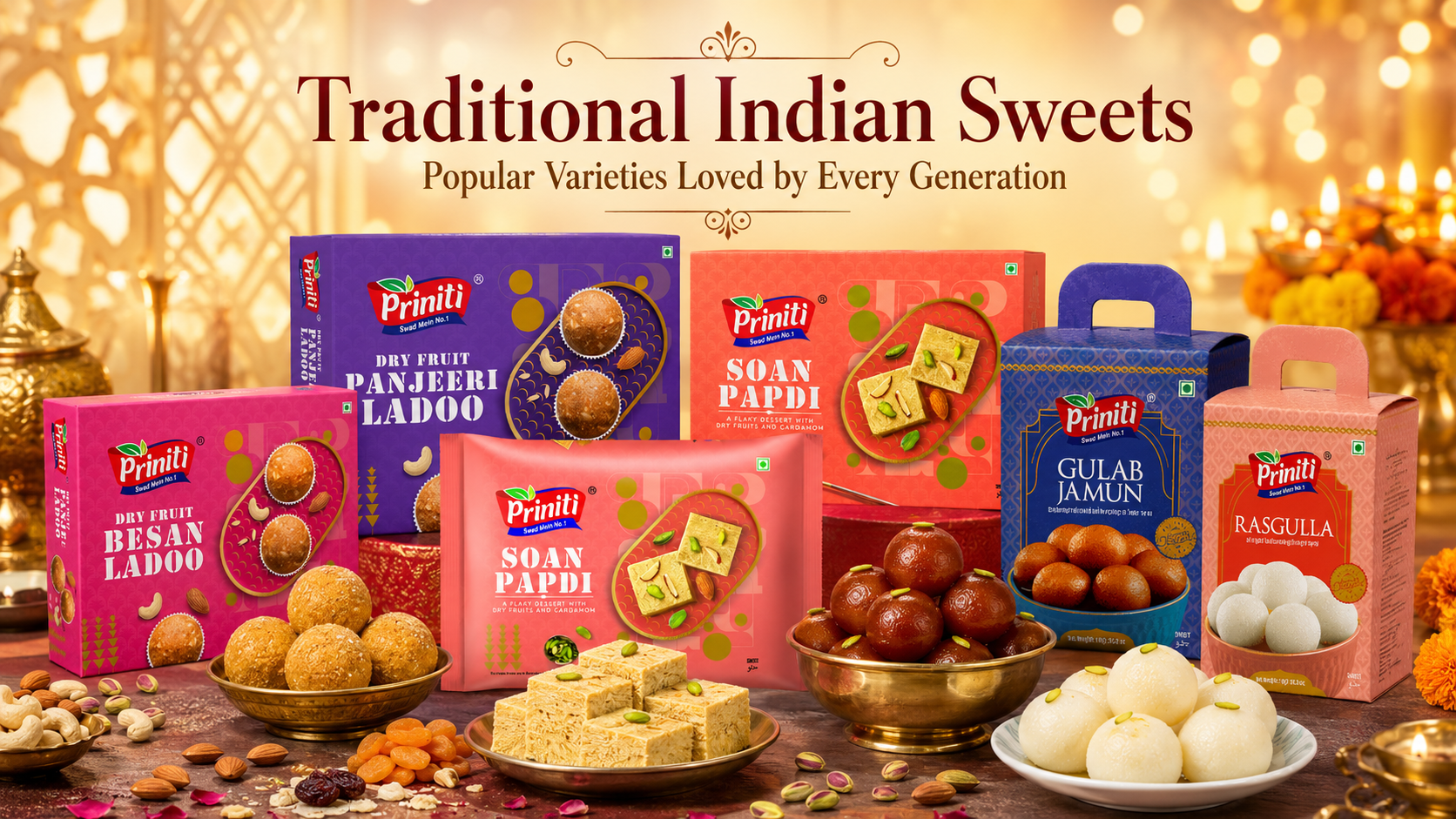
The traditional sweets portfolio includes:
- Dry Fruit Besan Ladoo
- Gulab Jamun
- Dry Fruit Panjeeri Ladoo
- Rasgulla
- Soan Papdi
- Soan Papdi Pouch
These products are developed to meet the expectations of modern consumers while preserving the traditional flavours that have made Indian sweets popular for generations. By offering a diverse range of traditional indian sweets, Priniti Foods aims to meet the preferences of consumers across different regions and age groups.
With a portfolio of over 165+ products across multiple categories and a growing presence across India, Priniti Foods continues to support retailers, distributors, and consumers through a strong distribution network.
Quality and Consistency That Build Consumer Trust
In the sweets category, quality plays a critical role in driving repeat purchases and customer satisfaction. Consumers expect consistent taste, freshness, and product quality every time they make a purchase.
Maintaining high manufacturing standards, using quality ingredients, and ensuring proper packaging all contribute to building consumer trust. These factors not only improve customer loyalty but also help retailers and distributors achieve long-term sales growth.
Consistency remains one of the key factors behind the continued success of traditional sweets in today’s competitive FMCG market.
The Future of Traditional Indian Sweets
The future of traditional sweets remains highly promising. As organized retail continues to expand and consumers increasingly prefer packaged food products, demand for branded sweets is expected to grow further.
Consumers today want products that combine traditional taste with modern convenience. This trend is creating significant opportunities for sweet manufacturers and distribution partners across India.
As the market continues to evolve, traditional Indian sweets are expected to remain an important part of India’s food culture while supporting growth across the FMCG sector.
Conclusion
Traditional Indian sweets continue to hold a special place in Indian culture and everyday life. From Dry Fruit Besan Ladoo and Gulab Jamun to Rasgulla and Soan Papdi, these products remain popular because of their rich taste, cultural significance, and strong emotional connection with consumers.
As demand for packaged and hygienically produced sweets continues to grow, the category offers strong opportunities for retailers and distributors alike. By combining authentic flavours with quality-focused manufacturing, Priniti Foods continues to bring traditional sweets to consumers across India while supporting the growing demand for trusted and convenient sweet products.
Frequently Asked Questions (FAQs)
1. What are traditional Indian sweets?
Traditional Indian sweets are desserts that have been enjoyed in India for generations. Popular examples include Gulab Jamun, Rasgulla, Besan Ladoo, Panjeeri Ladoo, and Soan Papdi.
2. Why are traditional Indian sweets popular across generations?
Traditional sweets are closely connected to Indian festivals, celebrations, family traditions, and cultural heritage, making them popular among people of all age groups.
3. Which traditional Indian sweets are most popular in India?
Some of the most popular traditional Indian sweets include Gulab Jamun, Rasgulla, Soan Papdi, Besan Ladoo, and Panjeeri Ladoo.
4. Are packaged traditional Indian sweets growing in demand?
Yes. Consumers increasingly prefer packaged traditional sweets because they offer convenience, hygiene, quality consistency, and longer shelf life.
5. What traditional sweets does Priniti Foods offer?
Priniti Foods offers a range of traditional sweets, including Dry Fruit Besan Ladoo, Gulab Jamun, Dry Fruit Panjeeri Ladoo, Rasgulla, Soan Papdi, and Soan Papdi Pouch.