The demand for packaged snacks in India has grown rapidly over the past decade due to changing consumer lifestyles, expanding retail infrastructure, urbanisation, and the rise of quick-commerce platforms. From traditional namkeen and potato chips to modern ready-to-eat snack products, packaged snacks in India have become an important part of everyday consumption across urban and rural markets.
As consumer demand continues to increase, businesses are focusing not only on product availability but also on operational efficiency, supply consistency, packaging quality, and scalable distribution systems. The growth of supermarkets, online grocery platforms, and instant delivery services has further accelerated the expansion of packaged snacks in India across multiple market segments.
For manufacturers, distributors, wholesalers, and retailers, the industry now presents significant expansion opportunities. However, increasing competition and changing consumer expectations are also creating operational challenges that require stronger manufacturing systems and efficient supply chain management.
Growth of Packaged Snacks in India
The market for packaged snacks in India has expanded significantly due to rising disposable income, busier lifestyles, and increasing demand for convenient food options. Consumers today prefer products that are easily available, affordable, and suitable for quick consumption.
Retail expansion has played a major role in this growth. Products are now distributed through:
-
Kirana stores
-
Supermarkets
-
Hypermarkets
-
Online grocery platforms
-
Quick-commerce applications
The expansion of digital commerce and faster delivery systems has improved accessibility for packaged snacks in India across Tier 1, Tier 2, and Tier 3 cities. As distribution networks continue to strengthen, manufacturers are able to reach wider consumer bases more efficiently.
The increasing popularity of regional flavors, affordable packaging sizes, and modern snack varieties has also contributed to the growth of packaged snacks in India. At the same time, consumers are exploring healthier and innovative snack options, creating new opportunities for manufacturers and distributors.
Operational Challenges in the Packaged Snacks Industry
Despite strong market growth, the packaged snacks industry faces several operational challenges. Maintaining consistency at scale has become one of the biggest concerns for manufacturers managing large production volumes.
One major challenge is product freshness and shelf life management. Since packaged snacks in India move through long supply chains involving distributors, wholesalers, and retailers, maintaining product quality during transportation and storage becomes essential.
Raw material dependency creates another challenge. Ingredients such as edible oil, potatoes, gram flour, spices, peanuts, and seasoning materials are directly affected by agricultural pricing fluctuations and supply instability. Sudden increases in raw material costs can impact production planning and profitability.
Distribution efficiency also plays a critical role. Delayed deliveries, inconsistent inventory movement, and poor logistics coordination can affect retailer relationships and product availability. As quick-commerce and modern retail continue to grow, supply chains are expected to operate with faster replenishment cycles and improved operational visibility.
Regional demand variation further increases operational complexity. Consumer preferences differ across markets, requiring manufacturers to manage multiple product variations without affecting production efficiency.
Packaging durability remains another important operational factor. Since moisture and air exposure directly impact freshness, manufacturers of packaged snacks in India must invest in strong packaging systems that protect products during transportation and storage.
How Manufacturers Maintain Product Quality
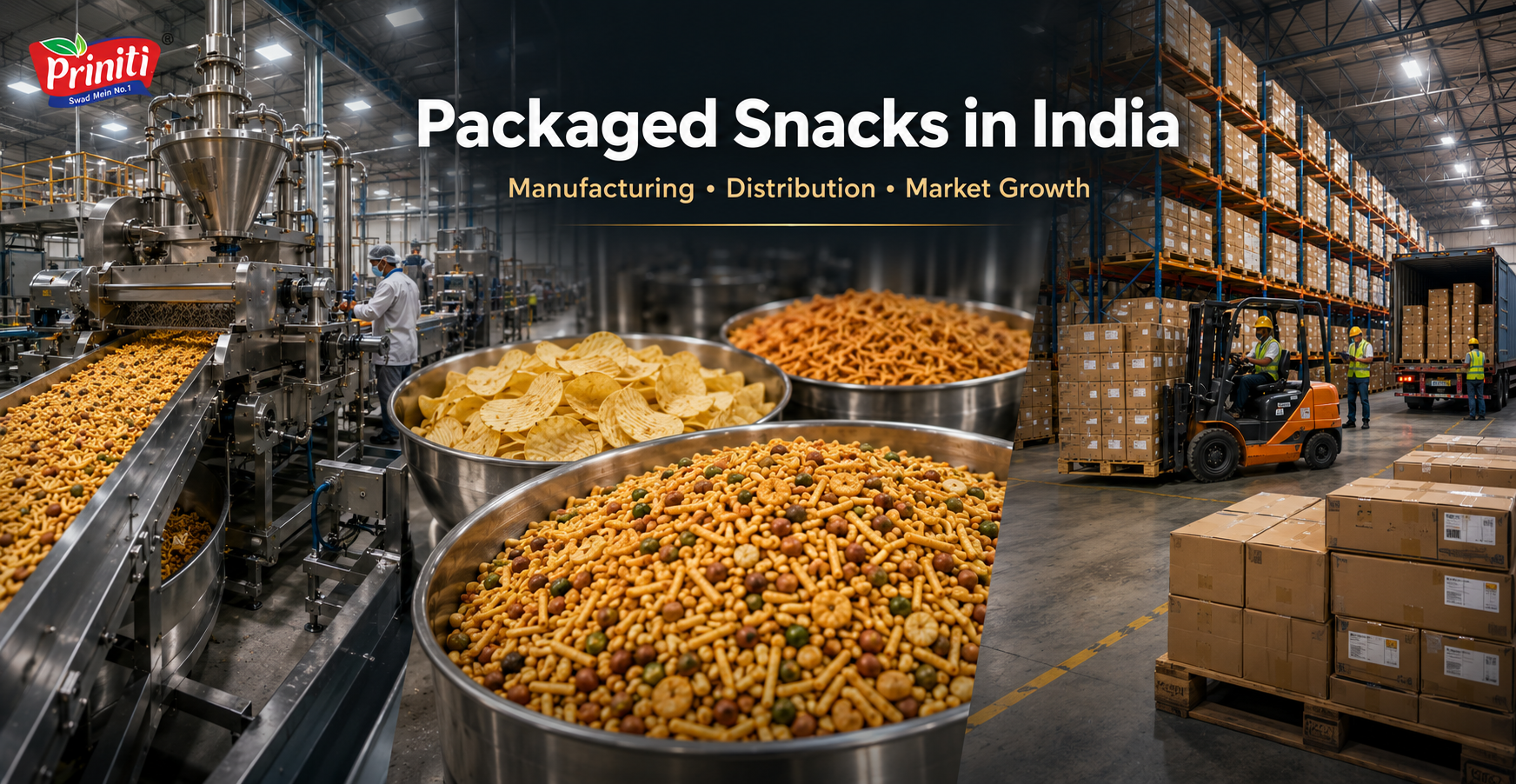
As competition increases, manufacturers are focusing heavily on quality control systems and production efficiency. Maintaining consistency across large-scale operations requires structured manufacturing systems supported by modern machinery and operational planning.
Most large-scale manufacturers follow controlled production processes that include:
-
Raw material inspection
-
Automated processing systems
-
Oil quality monitoring
-
Seasoning consistency checks
-
Packaging quality inspection
-
Hygiene management systems
Many manufacturers of packaged snacks in India are also investing in automated packaging systems to improve efficiency and reduce product damage. Automated systems help maintain consistency in packaging weight, sealing quality, and shelf-life management.
Food safety certifications are becoming increasingly important in the FMCG sector. Manufacturers with certifications such as:
-
FSSAI
-
FSSC 22000
-
APEDA
-
FDA export approvals
They are better positioned to maintain quality standards and build retailer trust.
Production planning also plays an important role in maintaining operational consistency. Manufacturers often schedule production cycles based on market demand, inventory movement, and seasonal consumption patterns.
Distribution Systems for Packaged Snacks in India
Distribution efficiency has become one of the most important factors in the success of packaged snacks in India. Even strong products can struggle in the market if supply systems are inconsistent.
The supply chain usually follows a structured model:
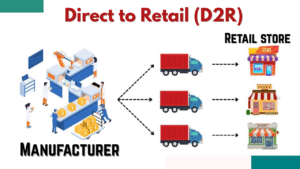
Manufacturer → Distributor → Wholesaler → Retailer → Consumer
Each stage is important for maintaining product availability across different markets.
Distributors help manage bulk movement and regional supply, while wholesalers and retailers ensure products are available to consumers consistently. Efficient logistics systems reduce delays, improve inventory movement, and support faster replenishment cycles.
As demand increases across multiple regions, manufacturers are focusing on:
-
Regional warehousing
-
Faster dispatch systems
-
Inventory tracking
-
Logistics optimization
-
Demand forecasting
These operational improvements help reduce supply disruptions and maintain stable inventory levels.
The growth of quick-commerce platforms has further increased pressure on distribution systems. Faster delivery expectations require manufacturers and distributors to maintain stronger coordination and shorter supply cycles.
For packaged snacks in India, strong distribution networks are now as important as product quality itself.
Role of Packaging in Packaged Snacks in India
Packaging plays a major role in maintaining freshness, improving shelf life, and increasing product visibility in retail environments.
Strong packaging systems help:
- Protect products from moisture
- Prevent air exposure
- Reduce transportation damage
- Improve product presentation
- Extend shelf stability
Smaller SKU packaging formats are becoming increasingly popular because they perform well in convenience-based purchasing environments. Affordable small packs help improve accessibility across different income groups and retail segments.
Attractive packaging design also influences purchasing decisions. Products with better packaging visibility often perform more effectively in supermarkets and modern retail shelves.
As competition increases, manufacturers of packaged snacks in India are investing more in packaging innovation to improve operational efficiency and market positioning.
Market Trends Shaping Packaged Snacks in India
The industry is evolving rapidly as consumer behavior continues to change. Several trends are shaping the future growth of packaged snacks in India.
One major trend is the increasing demand for healthier snack options. Consumers are showing growing interest in:
- Baked snacks
- Low-oil products
- Protein-rich snacks
- Ingredient-focused products
Regional flavor innovation is also becoming more important. Consumers are increasingly attracted to products inspired by traditional and local taste preferences.
The rise of quick-commerce and online grocery platforms is rapidly transforming purchasing behavior and delivery expectations across the FMCG sector. Faster delivery expectations are influencing packaging, inventory planning, and distribution systems.
Export opportunities are also expanding for Indian snack manufacturers. International demand for Indian snack products is increasing, especially in markets with strong Indian consumer populations.
Manufacturers capable of balancing operational scalability with changing market trends are better positioned for long-term growth in packaged snacks in India.
How Priniti Foods Supports Scalable Snack Operations
As the snack industry becomes more operationally complex, businesses are increasingly looking for manufacturing partners with scalable systems and reliable distribution capabilities.
Priniti Foods has developed a structured operational ecosystem focused on manufacturing consistency, quality control, and scalable distribution support. With over 16 years of experience in the FMCG sector, the company operates across multiple regions while maintaining efficient supply systems.
The company has established a wide distribution network covering multiple regions and retail markets, including:
- 12+ countries
- 38 states
- 1100+ cities
- 1 lakh+ retail outlets
- 2600+ distributors and clients
Priniti Foods maintains operational consistency through structured manufacturing systems, logistics coordination, and quality-focused processes. The company also follows strong compliance standards supported by certifications such as:
- FSSAI
- FSSC 22000
- APEDA
- FDA Thailand
- FDA USA
Its manufacturing and distribution capabilities support growing demand across multiple market segments while maintaining product quality and supply efficiency.
Conclusion
The market for packaged snacks in India continues to expand rapidly due to changing consumer behavior, retail growth, and increasing demand for convenience-based food products. However, success in this industry now depends not only on production capacity but also on operational efficiency, supply chain management, packaging quality, and distribution scalability.
Manufacturers capable of maintaining consistent quality while managing large-scale operations are better positioned for long-term growth. Businesses entering the packaged snacks industry must focus on selecting reliable manufacturing and distribution partners that can support scalable expansion and operational stability.
As competition continues to grow, distribution efficiency, inventory management, structured operational systems, scalable distribution networks, and manufacturing efficiency will remain critical factors shaping the future of packaged snacks in India.
FAQs
1. What are packaged snacks in India?
Packaged snacks in India include ready-to-eat snack products such as namkeen, chips, extruded snacks, and other packaged FMCG snack items sold through retail and distribution networks.
2. Why is the packaged snacks market growing in India?
The market is growing due to urbanisation, changing lifestyles, quick-commerce expansion, rising disposable income, and increasing retail accessibility.
3. What operational challenges affect packaged snacks in India?
Manufacturers face challenges related to supply consistency, packaging durability, logistics management, shelf-life maintenance, and fluctuating raw material costs.
4. Why are distribution systems important for packaged snacks in India?
Efficient distribution ensures faster product availability, stable inventory movement, and improved retailer relationships across multiple markets.